Sunday, 6 May 2012

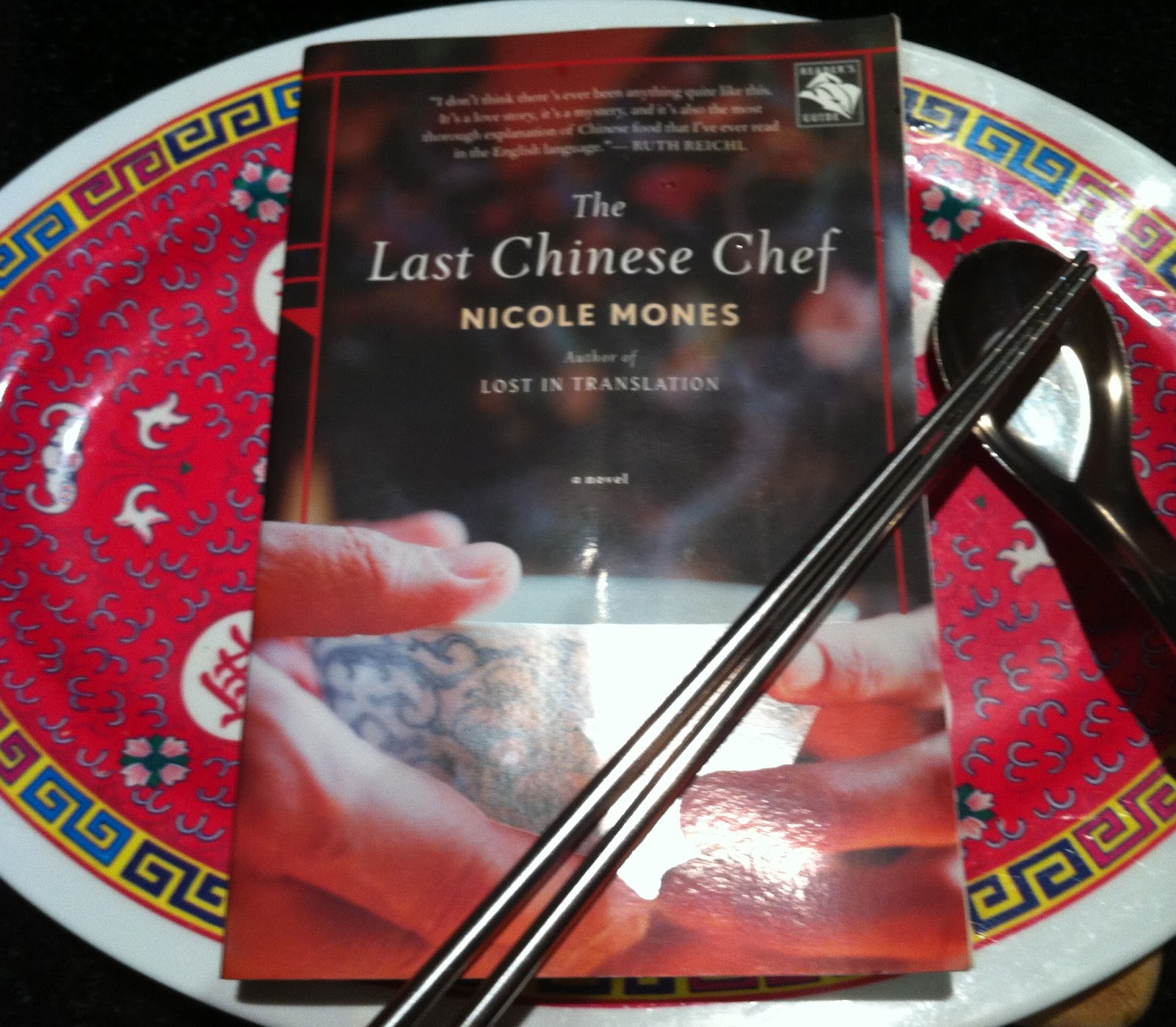
The Last Chinese Chef


The Last Chinese Chef is Nicole Mones third novel. It is a fictional story yet it reads with the same integrity as the fictional novel and modern classic about Japanese society The Memoirs of a Geisha by Arthur Golden. What sets these two authors apart from the rest is their in depth research and attention to detail. They blend the new with the old, the modern with the ancient, fact with fiction to showcase a complex story within the romance and sentimentality of a passing era.


"Food was always surrounded by coded behaviours 
that themselves carried great meaning." p17


The Last Chinese Chef is about food. From cover to cover. It romantices the symbolism, preparation, skill and the respect for flavour, texture, quality and presentation expected of a gourmand of Chinese cuisine.


 "Food should be more than food; it should 
tease and provoke the mind." p36


Having said that, as I read the novel, it was always in the back of my mind the reality, that China is a nation of people who must be fed, whatever the cost and historically they will eat anything that has a pulse. This is not isolated to China.

Across the globe we hunt, catch and slaughter without a second thought. However, China, is well known for its specialities which I feel only add to the pain, suffering and extinction of many species. Of note, was the recipe about "drunken shrimp" which are eaten alive after they have been marinated in alcohol, or the praise by the fictional chef in the novel for the creamy texture of shark's fin soup.

Nicole tells a story of a fast moving society that once rested on a culture so vast, it was spread across many dynasties, until it was interrupted by Communism, the Cultural Revolution, incursion from the West and now industrialization and globalization. Nicole taps in to the recent past of Imperialism and Communism and weaves it into China's modern history.


"Great food needed more than great chefs; 
it needed gourmet diners ...but the Communists 
had made it illegal to appreciate fine food, 
or even remember that it once existed" p39


Amid the feasting is the story is about a grieving widow - Maggie Elroy - an American food writer who travels to China to come to terms with a paternity claim against her late husband and to cover a magazine assignment of a cooking competition in China.

She meets chef Sam Liang - an American of Chinese and Jewish descent who has returned to China to re-discover his ancestry and follow his passion for cooking. He is taught by his "uncles" who are not related to him by blood but by connections to family members over the generations.

Sam enters a national cooking competition and much of the food choices he discusses with Maggie are for her magazine article and what will constitute a suitable winning menu. There is mention of crispy fried duck, carp in lamb's broth, dipped snails and fried sparrow. There is tofu with the sauce of thirty crabs! stuffed pork, silver fungus, braised soya beans, steamed pork ribs in lotus leaves and all sorts of herbs and spices, marinades and additives such as soya sauce, sesame oil, chinese wine, ginger, shallots, bean paste and vinegar.

Each chapter begins with an inspirational quote from a fictional food bible called The Last Chinese Chef  by Liang Wei. Nicole did a remarkable job composing this tome that reads like an ancient text. The excepts from this book do not exist but it is shaped around the skeleton of classical sources by Chinese scholars who wrote on the subject of Chinese cuisine and its imperial roots.

By the end of the novel both Sam and Maggie find they are well matched, like the flavours in a great meal and Maggie's love affair with Sam, China and its food begins.


"The right food can ease the mind and the hearts." p36


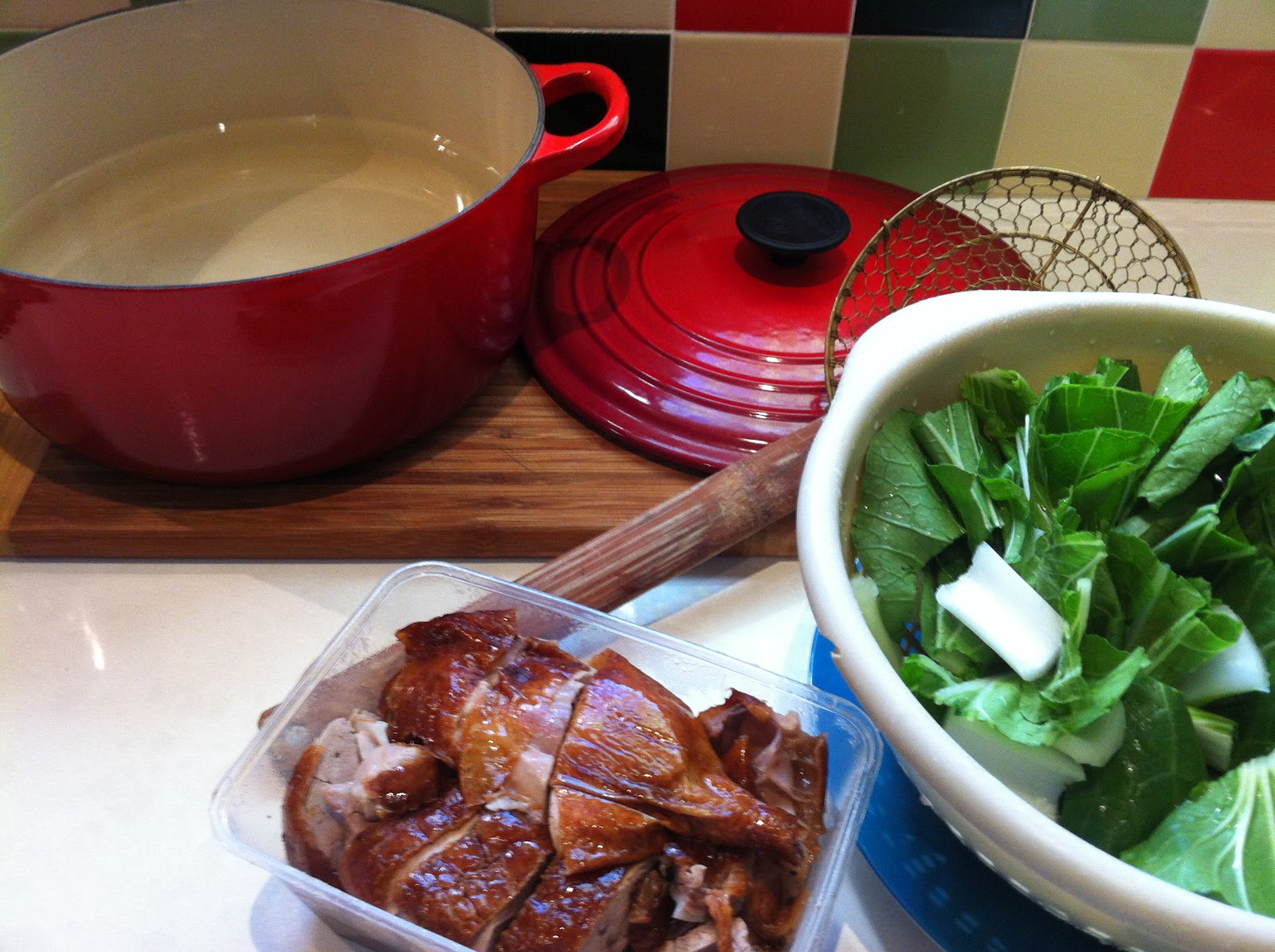
There are recipes at the end of the novel and more on offer at www.nicolemones.com. Duck is mentioned so many times throughhout this novel that I have included a family favourite.


My Easy Duck Soup

Ingredients

1/2  duck chopped
1 bunch any green chinese vegetable of your choosing. 
I used bak choy this time.
2 litres of water seasoned to taste.


 Method


Place duck pieces in water and bring to the boil to release the flavours. 
Turn down to a simmer and season with salt and pepper. 
Add greens close to serving time so that they are 
wilted but not overcooked. 


This is essentially a clear soup but 
you can add noodles if you want a heartier meal. 


Enjoy!


©2011 My Novel Idea by Ann Etcell-Ly/All Rights Reserved

Tuesday, 17 April 2012

The Best Exotic Marigold Hotel


The Best Exotic Marigold Hotel by Deborah Moggach - is not the romanticized comedy depicted by the movie of the same name. The novel is far more confronting. In fact, it is a rant from beginning to end on ageism, racism, patriotism, chauvinism and sexism.

Moggach, who has written 15 novels, said she wrote the book to depict the plight of the elderly in western communities - but I think it is much more than that! You will be tested, so be warned!

The author puts ideas and words in to the mouths of her characters with such force, that it is both amusing and shocking. Her characters "opinions" could easily be deemed politically incorrect, but somehow she manages to get away with it. Or does she? That is up to you.

For instance, Moggach uses her characters on both sides of the continent (Britain and India) to express outspoken and confronting criticisms of one another and their respective value systems without excuse or apology.

Two such characters are the Indian doctor Ravi and his English wife Pauline who take a swipe at the changing face of  British health care:

"...it is immaterial what country you happen to be in, when your time comes...in all likelihood the last face you see on this earth, would be a black one." p71

The novel informs us that today's British elderly, due to their frailness and reduced resources, are feeling threatened or are indeed physically threatened by the changing society in which they live. Once again Pauline sympathetically informs the reader:


"Old people like the familiar. What's familiar about the world they live in now? Britain is a foreign country to most of them these days...And full of darkies." p20


These outspoken comments and confronting observations continue throughout the book, via conversations within the group of elderly misfits who travel to India to live in a "home".  Correction. They prefer "hotel".

All the aged are between 60 - 70 years and all have their own story to tell. The negative side of being elderly is blatantly exploited by the author as the mouthpiece to make her point, at the expense of all the good qualities that one who reaches wise, old age should possess.

The elderly residents are characterized in varying degrees of  inflexibility, ignorance, naivety,  perversion; they are insulting, overly conservative or suspicious of the world and each other. This allows the comments they make to be "acceptable" by the reader as this is true to character.

Having said that, is it age that makes us so? Or have they been like this their whole lives and age has simply weathered and  exposed their thin veneers?

From fiesty racist, Muriel (played by Maggie Smith) to self-effacing conservative (played by Judy Dench) all the characters have their own contributions to make to this messy world we live in.

A group of aged Brits, brought together by circumstance, find themselves as the new residents of a dubious business venture run by polite, charming yet manipulative, opportunistic Indians. The hotel is, unknown to them,  run by charlatans and imposters. The one thing they all share is their quest for survival.

Despite this shared quest, the death of Norman was caused by the spiteful revenge of the hotel's proprietor. It's frightening to think that his involvement will go unchallenged and unpunished from a lawful point of view. Morally however, should we be content that Norman caused his own downfall, the other hotel guests, eager to keep up appearances, unwittingly helped cover it up and that Sonny will redeem himself (according to Indian teachings) in the next life?

Sonny does try to make clumsy and dangerous amends with Norman's daughter, Pauline. When she returns home to England to scatter her father's ashes on his favourite walking trail, she opens the urn to find it full of cocaine.

While reading this book I, as the reader, sensed a disturbing disquiet that " retirement homes" (like everything else) may be outsourced in the future.

The proprietor Sonny congratulates the group with a speech;

"Our modest venture will be the start of a whole new export market - no longer cotton - but people. To which one guest asks, "What? by the kilo?" p229

Sonny continues with his speech, reminding the guests of India's reverence for the elderly. Another guest - Theresa (a reformed devotee of Indian spiritualism) does not mince words when she whispers under her breath:

"...yes, and you press baby girls faces in to sacks until they suffocate, burn brides for their dowries and force children in to labour." p259.

The jousting continues.

Even quiet, conservative Evelyn, when trying to explain what aging feels like, points to a group of Muslim women waiting to catch a bus. They are all enveloped from head to foot in burkhas.


"Being old is like wearing one of those." p269


A truce of sorts takes place when the book ends with the marriage of two elderly residents. It seems that everyone has adjusted to a shared co-existence. No doubt the barbs will continue since that is the human condition.

So too, is the shared need to belong and feel renewed.


"With their blushing cheeks and pink lips, the couple looked quite young again."


Many conversations take place around the dining table and since Chicken Biryani was a favourite of the guests I have chosen this dish as a symbol of communication, honest endeavour and civility. No recipes are included in the novel.


Chicken Biryani 

This is a Pakistan Indian dish. Chicken pieces are cooked in a spicy tomato and yogurt sauce, accompanied by spiced fried rice, crispy pan fried potatoes and raita (cucumber, mint, yogurt dip).

Ingredients

2 large onions (chopped)
2 cloves garlic crushed
3 teaspoons grated ginger
1/2 tspn chilli powder
1/2 tspn tumeric
1 tspn ground cummin
1 can crushed tomatoes (cheats way)
1/2 cup greek yogurt
2 tspn dried mint 1/2 teaspoon cardamom
2 chicken breasts diced

Method

Fry onion garlic ginger until soft and fragrant in a little peanut oil or ghee. Add dry spices and stir
 in hot pan to release flavours. Add can of tomatoes and yogurt. Allow to simmer in to a sauce. Add chicken pieces and cook slowly at a simmer for about 40 minutes. The sauce will become reduced.


 Ingredients

500gm precooked rice
 1 large onion diced
1/2 tspn tumeric
1/2 tspn cardomom
3 whole cloves
1/2 tspn ground ginger
salt

Method

Fry onions until golden
Add spices 
Add rice and stir through.


Fry diced potatoes in oil and make raita


Raita

Ingredients and method

Combine 1 large lebanese cucumber diced
1/2 cup plain yogurt
1/2 cup finely chopped mint
pinch salt


Enjoy!


©2011 My Novel Idea by Ann Etcell-Ly/All Rights Reserved


Wednesday, 22 February 2012

Catching Up

I have been absent for a while (December through January) as life got very busy. I still have to finish my last book review and photos which I will do shortly. I am also entering a challenge put out by blogger "The Betty Boo Chronicles" to read 10 memoirs before December 2012. I will be looking for ones with food in them. Any suggestions?


©2011 My Novel Idea by Ann Etcell-Ly/All Rights Reserved

Saturday, 1 October 2011

Lemon Meringue Pie Murder by Joanne Fluke

The Lemon Meringue Pie Murder, with its cheery cover, looked like a promising read. A light hearted whodunnit for the young at heart, but for me, it seemed to lack pace. Perhaps I am not so young at heart after all! Despite this, Joanne Fluke, the author of the Hannah Swensen Mysteries has a big following. 


To date, she has penned at least a dozen murder mysteries and a recipe book. Her series includes such engaging titles as, the Candy Cane Murder, the Key Lime Pie Murder, the Carrot Cake Murder and the Chocolate Chip Cookie Murder - to name a few.

The Lemon Meringue Pie Murder, which is set at Lake Eden in Minnesota, seems to be written to a formula (nothing wrong with that) but I was hoping for something a little bit funny and a little less contrived. After all, death by lemon meringue pie sounds so absurd it could be a fun read - couldn't it?

The famous main character, is Hannah Swensen - the 20-something co-owner of The Cookie Jar who spends most of her time reluctantly solving murder mysteries. 

This amateur sleuth has a 100 per cent success rate and always gets her man (or woman). So imagine my surprise, when we are introduced to her in Chapter One as a coffee drinking, overweight, cat owner, who cannot fit in to her slacks and decides to go on a diet?

I found this underlying theme to her character very distracting, but on reflection, her need for a diet is not surprising considering the huge amounts of sugar and butter in the recipes churned out by The Cookie Jar.

"Come in and have a cookie. I've got Peanut Butter Melts, Apricot Drops and Chocolate Chip Crunchies." p80  
  

(Recipes are supplied at the end of each chapter).


The next three chapters introduce us to the cast and Hannah's two love interests. Norman, her conservative boyfriend and the respectable town dentist; and Mike, the sexy, resourceful county detective who attempts to deter her from getting involved in police business.

It is not until Chapter Five, and many cups of coffee and dieting angst later, that the murder mystery unfolds with the discovery of the town's flirty, beautician Rhonda, who is found dead in Norman's new house. 

And with her, a trail of food clues left for Hannah to solve.
 

"Rhonda's last meal was a piece of your Lemon Meringue Pie...you have to help investigate. It is your duty." p81


The Cookie Jar is used as a prop in this murder mystery (and I suspect this to be the case in other stories in the series). It is merely a vehicle to tell the story, set the scene and plot and provide the backdrop and connections to solve the murders. It has no other food symbolism, or sense of belonging or atmosphere since most of the crime-solving takes place outside The Cookie Jar.

The cookies however, showcase Hannah's creative side and give her an identity and purpose. She also likes to give the cookies away to show her generous spirit, or her manipulative side when she wants information from a suspect.

The continuing trials and tribulations of Hannah's self image and her dietary efforts seemed at odds with being the owner of The Cookie Jar. 

These trials and tribulations, hinted at the type of sub conscious food values that may be held by the author (and ourselves). Hannah's struggle with her weight and food choices in this murder mystery is just a microcosm of our affluent world and shows just how pervasive this food philosophy is in popular culture.

The inferences I got from this love/hate relationship with food was largely negative and I wondered at the subliminal message that was being passed on, in an entertaining way, to anxious teenage girls?

On one hand, Hannah is a smart, brave, and highly motivated investigator and her flip side is an anxious, self depreciating dieter who is not satisfied with her looks and thinks the reason she has not been proposed to is because of her perceived weight.


QUESTION: Why are we all trying to be what we think we should be (according to advertisements) rather than who we really are?


In the first chapter we are told,


"As much as the prospect sickened, she would have to limit her intake of food." p11 


QUESTION: Why is moderation and temperance presented negatively and gluttony of no consequence in this modern world? 

 
Ten pages later we read,

"Sighing, Hannah placed the cookie back on the plate. She had to (reluctantly) exercise will power." p21


QUESTION: Wouldn't we be all better off if we embraced or re-learned will power?


Further along, Hannah's love/hate attitude to food,


"Visions of endless streams of salads and low-cal dressings danced through Hannah's head."


QUESTION: Why are good food options (salads) seen as a punishment and not a reward?


This angst, revolving around food choice, threads its way through the entire book, chapter by chapter, right down to the last sentence of the book, which meant I couldn't help but question it in the light of my own food values.


"Hannah's dietary resolve waivered dangerously when the waitress wheeled up the dessert cart." p89


QUESTION: Why do we feel guilty if we treat ourselves, and feel self-righteous or victimized if we don't?" 


Parallel to this dietary dilemmas is a murder mystery waiting to be solved. Was Rhonda murdered by the jet-setting pilot, a jilted lover, the two-timing school principal, a jealous wife, the tango dancing reverend or the county's helpful handyman duo?

By the end of the story, the killer is caught, Hannah's trousers are loose around the waist (yay) and the diet is broken.


"I'm skipping my salad and entre tonight. Just bring the dessert cart and park it right here." p326


Mystery Cookies 
Makes 10 dozen!!


"The new cookies smelled wonderful, a blend of cinnamon, nutmeg and a secret* ingredient." p216


1/2 cup melted butter
3 1/2 cups sugar 
2 eggs lightly beaten
1 can condensed tomato soup*
2 tspns cinnamon
2 tspns nutmeg
2 tspns baking powder
2 tspns salt
2 cups raisins
2 cups chopped walnuts
4 1/2 cups of flour


Combine all ingredients until well mixed. Then stir in raisins and nuts. Allow to sit for 10 minutes. Drop the dough by teaspoon onto several lined baking trays and bake at 350 degrees for ten minutes or until golden brown. 

Note: Halve the mixture for less cookies or make larger cookies or invite a crowd to your place. 

Leave 3-finger widths between cookies as they spread slightly. Transfer to wire rack to cool. The cookies will be soft and chewy in texture and you will either love them or hate them. In my household, the camp is divided.


If you don't like the idea of adding condensed tomato soup to your cookie mixture, try the poor man's blintzes recipe below.


Aunty Kitty's Cottage Cheese Pancakes


2 cups cottage cheese 
(in keeping with the storyline I used Weight Watchers brand)
4 eggs
1/2 tspn salt
1/2 cup flour


Mix all the ingredients together and allow to rest for one hour. Heat non stick griddle or fry pan and dollop pancake mix in to the pan. I found it easier to use an egg ring as the rings kept the shape and made flipping easier.

*The mix yields 12 pancakes using the egg rings (3 per person). 

Once cooked to light golden cover, plate up and serve with jam, fresh fruit or sour cream.


©2011 My Novel Idea Ann Etcell-Ly/All Rights Reserved

Thursday, 29 September 2011

Up and Coming Attraction! Amish Friendship Bread

The plan this week was to cook Amish Friendship Bread after having read the novel Friendship Bread by Darien Gee. As I live in Australia, I only know of the Amish through Hollywood or the occasional news report from the U.S. so I did not realize it would take ten days to make the special bread. Furthermore, I have never had a reason to make bread before so it could be interesting.


The first step. Make your starter ...

DO NOT USE METAL UTENSILS. Wooden spoon, glass/ceramic bowl and large plastic or glass container or jar or clip lock bag for the starter to grow and bubble.

Ingredients

7g sachet of dry yeast (I used Tandaco)
1/4 warm cup water (approx 110 degrees. Not too hot or you will kill the live yeast)
1 teaspoon sugar

Allow to stand. If the mix bubbles in 5 minutes you know your yeast is alive and kicking. 


Then stir in:

1 cup all-purpose flour
1 cup sugar
1 cup warm milk

Set aside and do nothing for the first day.

Here's Darien's protocol (p8)if you want to join me in making the starter for yourself and three friends (hence the name friendship bread); or four loaves for yourself - as the case may be.

Day 1:  Make the starter and it let stand. If you are given the starter by a friend let it stand and do nothing the first day. Do not refrigerate.
Days 2-5:  Stir with wooden spoon if mix is in a container, or squish and mash the mix if in a clip lock bag
Day 6:  Add to your container or bag 1 cup flour, 1 cup sugar and 1 cup warm milk and combine.
Days 7-9: Stir with wooden spoon or squish and mash if in bag
Day 10: Pour the mix in to non-metal bowl. Add 1 1/2 cups flour, 1 1/2 cups sugar, 1 1/2 cups warm milk.

Measure out four separate cups of mixture and put into four separate containers or bags. Give the bag and the bread recipe to your friends and keep one for yourself to make your bread - Or make four different flavoured loaves.

Bread Recipe to follow in ten days. Darien not only supplies the bread recipe but many other delicious variations for using the starter - including brownies and pancakes. There are also many variations on the web.

Please note: It is said that no one knows the origins of this recipe so credit cannot be attributed to a single person. But a big thank you to all the great and generous cooks out there! 

In the meantime, while waiting for your starter to mature, buy yourself a bread loaf pan.


By the way, I am happy to try any one's family favourite - all recipes, tips and tricks are gratefully accepted.
©2011 My Novel Idea Ann Etcell-Ly/All Rights Reserved

Sunday, 18 September 2011

The Kitchen Daughter by Jael McHenry


The Kitchen Daughter is the debut novel of Jael McHenry, a columnist and home cook who lives in  New York. Her novel is a clever and subtle story that leads you by the nose like the tendrils of fragrant cooking smells, to explore the story's characters and their connections to loved ones, memories and their place in the world.

The story unfolds with the untimely death of two loving and protective parents and how the changed circumstances impact on their two adult daughters - Ginny and Amanda. 

The story is told through the eyes of Ginny, an attractive 20-something daughter who has Asperger's Syndrome - which is part of the spectrum of autism.

The author rises to the challenge to capture the "voice" of Ginny and the social awkwardness, the difficulty to read social cues, the inability to feel empathy, as well how she responds in the literal sense only - which is typical of those with Asperger's.

I suspect this is why the prose is fashioned to be short and abrupt. Perhaps the aim is to capture the expression and mindset, or the type of mindset and thought processes we are told are  typical of Asperger's. As we engage with Ginny we also gain insight in to ourselves and how we react in turn to what we consider to be normal.

Ginny describes herself as having a "personality" which is a warm way for the author to explain her main character to us.

The next challenge the author faced was creating situations and settings to show Ginny interacting with other characters within the story to exemplify how things can be construed and misconstrued by not only those with Asperger's, but also by those who interact with them.

Ginny is called the Kitchen Daughter, as true to form, she has focused on a particular interest and skill set (in this case cooking) which is typical of Asperger's. The cutting and dicing highlights her repetitive behaviours. Ginny is also depicted withdrawing from stressful situations in unusual ways.

But this is not a story about Asperger's. 

It is the story about a young woman, who through her interest in cooking, discovers her power to conjure up ghosts with the aroma of food. The ghosts she speaks to are no ordinary ghosts. They are the owners of handwritten recipes. The  first to appear to Ginny is Nonna, her grandmother, enticed by her redolent Ribollita recipe. 

It is her warning: "Don't let Amanda..." that drives the story and prods Ginny to discover family secrets, piecing together scraps of information devulged by ghosts awakened by Bread Soup, Georgia Peach, Midnight City Brownies, Biscuits and Gravy, home made play-doh, Aji de Gallina, boiled eggs and spicy hot chocolate.

Don't let Amanda..." What ? 

1. Not sell the family home ?
2. Not put a name on Ginny and thereby label her?  
3. Fail to provide early intervention for her daughter Shannon, whom Ginny fears is just like her?

Several threads connect and interconnect, their fragrances intermingle and tantalize and keep the reader guessing.

The role of food in this novel is multi-layered.


It is shown as a gift:


"This time we drop off the dishes without going inside. Our food pays the visit on our behalf." p185


As an observance:


"We are here because it is the day of the funeral. The family, they do not cook this day. We serve them instead. It is called seudat havra'h. Meal of consolation." p149


As an identity:


"The word normal is inclusive. Maybe I can live in the world, and be who I want to be after all." p196


As a comfort:


"I feel better if I cook. Something that will completely absorb me, push everything else out of my mind". p244 


Midnight City Brownies

125g butter
1/2 cup cocoa
1 Tblspn expresso coffee
3 eggs
1 cup raw sugar
1 tsp vanilla
1/2 cup flour
1/2 tsp coarse salt


Method


Preheat oven 350 degrees. Melt butter and stir in cocoa and expreso powder. Let cool. In a larger bowl, beat eggs until pale yellow. Add butter mixture. Stir in vanilla and flour until combined. Pour in to a brownie pan lined with lightly oiled foil. Sprinkle salt on top. Bake 30-35 minutes or until skewer comes out clean.


And with chocolate ganache (because I wanted to).


FYI: No reported ghostly sightings accompanied this recipe.


©2011 My Novel Idea Ann Etcell-Ly/All Rights Reserved

Monday, 12 September 2011

Losing It in France by Sally Asher


Losing It in France by Sally Asher is this week's unplanned choice. 

On Sunday morning, in the glittery, spring sunshine I did one of my favourite things. I went to a Book Fair. Before me lay Aladdin's Cave - boxes of books under, over and around trestle tables that stretched off in to the distance within the vast warehouse. 

Unfortunately, the books were not arranged by genre or grouped by category or author which forced book hunters to peer in to every box. Which of course is not a problem for the avid reader. But why is it that so many readers are married to non readers who stand by, like hour glasses, counting down to what they believe is adequate book hunting time for their partners? 

The undercurrent of nervous frenzy felt by harried partners on an unsaid schedule was palpable. Even so, amidst the group was a mother and daughter happily rummaging through the childrens' book boxes, serious gents looking for academic tomes (possibly disguised as westerns) and a father with a young son who whined "...but you told mum we were going to Bunnings."

I have to admit I was one of those harried partners who wondered how long her husband's patience would last. My husband is not a recreational reader because he argues he does "enough report reading in his job as it is".

We don't share many hobbies either, although he did a very good job of carrying the heavy box of books I was slowly collecting, and he also likes to eat what I cook. 

Which makes the choice of book for this week's blog even more amazing as it is one of his choosing. 

Actually I think the book chose him as he wasn't actively looking at anything in particular. The pale blue hardcover (without dust its jacket) with the modest title, so easily over looked by one and all  (but in hindsight looks so very French) wriggled itself in to his hand. 

On the drive home I wondered what it was about the title that took his fancy. 

Was it the destination "France"? Was it the words "Losing it" significant as he was getting tired of holding the box of books? Or maybe it was something else. 

Perhaps he was thinking about gay Pareee, city of love, and losing "IT" was actually about losing you know what? 

When I first saw the title I actually thought of losing one's baggage or wallet, or mind which says a lot about my romantic streak!

Anyway, the book turned out to be a winner. I read it from cover to cover that night and enjoyed the memoir about an overweight, young Australian woman who lived in France with her French lover and his family for three years.

During this time she learned not only to speak French but think French. She also learned the secrets of French food philosophy, etiquette and the need to never diet again. 

After Sally had lost weight, gained self esteem and parted company with her lover she returned to Australia.  She arrived home reborn, refreshed and enthusiastic about all things healthy and delicious. 

She married an Olympic athlete, set up house in Victoria and published her book in 2011.

"I remember Josianne gasping in horror as I heaped confiture a la fraise (strawberry jam) on to my baguette in the morning and piled white sugars in my coffee." p65.

At first I thought the author was too repetitive in her insistence that dieting was not necessary, planning was everything and we get fat not because of what we eat but how we think. 

Food is this book is seen as a celebration of the appetite NOT a plug to fill our emotional voids.  

"Remember, you must feed your body, your heart and soul, not starve them." p209 

Her repetitiveness throughout the book eventually won me over. She does make her point and the repetition soon became a mantra that would serve us all. 

"The French take shopping for food very seriously. It is probably as important and sacred as eating the food...food (you choose) must look alive." p98


Ask yourself does your fast food choice look alive? Do you think your junk food choice looks as though it has ever lived?

She also reminded me of many old favourites, that I now plan to re-visit, guilt free - French Onion soup, Salad nicoise and Chocolate mousse to name a few.


Cherry clafoutis

125g plain flour
2 eggs
75g caster sugar
icing sugar for dusting
250 ml milk 
1 x 425g black pitted cherries

Preheat oven 180C. Place flour and eggs in a bowl and beat together until smooth. Add caster sugar and milk. Mix well. Butter a baking dish and arrange cherries over the bottom of the dish. Cover evenly with batter and bake for 20 minutes until lightly golden. Dust with icing sugar. Serves 6. 

Note: I doubled the amount as I have four hungry sons. I also used frozen raspberries instead of cherries.

.

©2011 My Novel Idea Ann Etcell-Ly/All Rights Reserved